TRADE & ECONOMY
Detailed Report
-
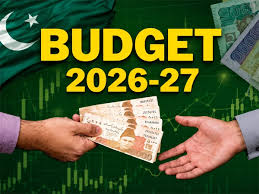
The IMF Mandate: The International Monetary Fund (IMF) has formally demanded that Pakistan abolish its current 10% subsidized sales tax concession on stationery items. According to reliable fiscal sources, the federal government is now seriously considering a proposal to raise the sales tax rate to a flat 18% within the text of the upcoming Finance Bill 2026. The structural shift aims to drastically scale back domestic tax exemptions to meet strict international bailout conditions.
-
Impact on Education and Corporate Sectors: The proposed tax hike is projected to trigger an immediate wave of inflation across the educational sector, driving up the retail prices of essential student supplies, including notebooks, registers, pens, and pencils. Financial analysts warn that if the standard 18% rate is implemented, the overall tax burden on foundational school and office supplies will effectively double. This move has raised deep-seated public concerns regarding a sharp increase in the baseline cost of running educational institutions and maintaining corporate offices.
Implementation Timeline: The federal administration plans to enforce the new tax schedule starting July 1, 2026, coinciding with the launch of the Fiscal Year 2026-27 budget. Sources confirm that the IMF delegation has already formally reviewed and signed off on the 18% stationery sales tax layout prior to concluding their recent policy rounds.
-
Broader Fiscal Policy Context: The decision to target the stationery sector is part of a larger, coordinated legislative push by the government to systematically restrict widespread tax exemptions across multiple domestic industries in the Budget 2026-27. While the state is moving aggressively to collect retail revenue from the educational supply chain, separate, high-stakes negotiations with the IMF are concurrently entering their final stages to secure potential tax relief and stabilization measures specifically for the country's struggling real estate sector.
Stationery Tax Revision Matrix (Budget 2026-27)
| Fiscal Parameter | Existing Policy Framework | Proposed IMF-Backed Policy | Projected Socio-Economic Impact |
| Sales Tax Rate | 10% Concessional Rate | 18% Standard Rate | Tax burden will effectively double for consumers. |
| Targeted Inventory | Educational & Office Materials | Notebooks, Registers, Pens, Pencils, Paper | Direct retail price hikes for student gear. |
| Enforcement Date | Current Fiscal Year | July 1, 2026 | Integrated into the upcoming Finance Bill 2026. |
| Policy Objective | Lowering the barrier to education | Broadening the tax net & cutting exemptions | Escalation of national literacy and schooling costs. |
-
Rs17 Trillion Outlay: Govt Balances Rs360 Billion ...
The federal government’s FY2026–27 budget sets a strict Rs15.264 trillion FBR tax targ...
-
PM Thanks Nation for Patience Through Crisis; Clai...
Prime Minister Shehbaz Sharif has hailed the FY 2026–27 federal budget as a turning poin...
-
Rs17 Trillion Federal Budget to Be Presented Today...
The federal government will present its Rs17 trillion budget for FY 2026–27 in the Natio...
-
Economic Survey: Pakistan’s External Public Debt...
Pakistan's external public debt reached $92.2 billion by the end of March 2026, according ...
-
Data-Driven Energy: Pakistan Establishes Historic ...
The Ministry of Energy has officially launched the Power Sector Data Governance Council (P...