TRADE & ECONOMY
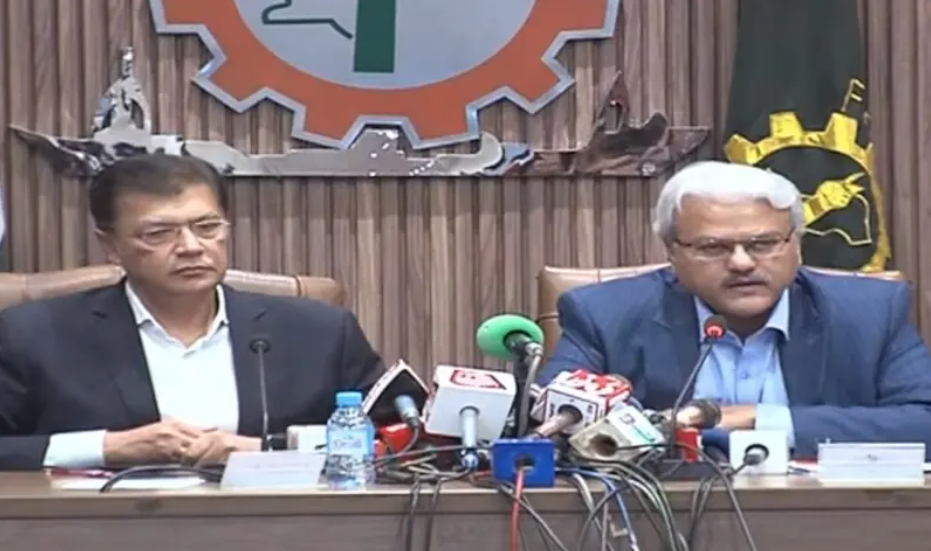
The FPCCI on Friday strongly condemned statements perceived as undermining Pakistan’s status under the European Union’s Generalised Scheme of Preferences Plus (GSP+), calling its protection a matter of national economic importance.
The response follows controversy sparked by remarks attributed to Kasim Khan and Zulfi Bukhari during a session held alongside the UN Human Rights Council. However, a fact-check by iVerify later found claims that Kasim had called for suspension of Pakistan’s GSP+ status to be false.
Addressing a press conference, FPCCI Vice Chairman Zaki Aijaz emphasised that safeguarding the GSP+ status was a “national responsibility” and warned against any actions that could harm Pakistan’s economic interests.
“FPCCI and the business community condemn any group involved in lobbying against Pakistan’s economic interests,” he said, adding that such actions could put millions of livelihoods at risk.
He urged all stakeholders to remain united for the country’s economic well-being.
United Business Group Patron-in-Chief S M Tanveer also denounced the controversy, stressing that the matter transcends political affiliations.
“Whoever speaks against the GSP+ status, from wherever, we will condemn it because this is not a joke,” Tanveer said.
Importance of GSP+ for Pakistan
Highlighting the economic significance of the GSP+ arrangement, Tanveer noted that around 37 per cent of Pakistan’s exports are directed to the European Union, with bilateral trade reaching approximately $12 billion.
He described the EU as Pakistan’s second-largest trading partner and underscored that key export sectors — including textiles, leather, and rice — heavily depend on preferential access under the scheme.
Since Pakistan was granted GSP+ status in 2014, exports to the EU have surged from around $2.5 billion to nearly $9.5 billion, he said, adding that the initiative has supported employment for approximately three million families.
Tanveer likened the GSP+ status to the “jugular vein” of Pakistan’s export economy, stressing its critical role in sustaining growth and employment.
He further asserted that Pakistan remains compliant with international labour laws and standards, claiming its performance compares favourably with regional competitors such as India and Bangladesh.
Ongoing scrutiny
The GSP+ status, granted by the EU to support developing economies, is subject to periodic reviews, typically every two years, to assess compliance with international conventions related to human rights, labour standards, environmental protection, and governance.
FPCCI officials reiterated that maintaining this status is crucial for Pakistan’s economic stability and export competitiveness, warning that any negative lobbying or misinformation could have serious consequences for the country’s trade prospects.
-
World Bank set to provide $10.7bn loan for Pakista...
Pakistan likely to receive $10.7bn from World Bank for a major energy project, supported b...
-
Yousuf Raza Gilani approves Rs265m surrender to na...
Senate Chairman Yousuf Raza Gilani approves surrender of Rs265m to support govt austerity ...
-
64% of Pakistan’s State-Owned Enterprises Yet to...
Over 64% of Pakistan’s state-owned enterprises remain unaudited, raising concerns over t...
-
Govt Finalises App-Based Fuel Quota System to Targ...
Pakistan plans app-based fuel quota system for bikes & rickshaws to target subsidies and c...

-
Cabinet Committee Confirms Stable Oil & Gas Reserv...
Pakistan’s Cabinet Committee on Petroleum says oil and gas reserves are satisfactory; im...