POLITICS & POLICY MAKING

Detailed Report
-
The Mid-July Target: Ireland is accelerating its legislative efforts to curb trade with Israeli outposts in the occupied West Bank, aiming to formally pass the restriction into law before the parliamentary summer recess in mid-July. Irish Foreign Minister Helen McEntee confirmed on Tuesday that the Cabinet officially approved the text of the Israeli Settlements (Prohibition of Importation of Goods) Bill 2026. Once enacted, importing any goods originating within these settlements will be categorized as a criminal offense under the country's Customs Act. McEntee stated that the sharp escalation in settler violence, coupled with ongoing operations in Gaza and Lebanon, made it clear that the current Israeli administration has "no desire" to pursue a peaceful two-state resolution.
-
The Goods-vs-Services Compromise: First promised in October 2024, the legislation has faced a protracted gridlock in Dublin due to intense pressure from both sides of the political aisle. Opposition lawmakers fiercely lobbied to expand the ban to encompass the lucrative services sector, while international corporate groups fought to abandon the bill entirely. Ultimately, Prime Minister Micheal Martin restricted the bill's parameters solely to tangible goods, labeling a service-sector ban as neither "viable" nor "implementable." According to data from Ireland's Central Statistics Office, the narrow scope means the law will affect only a handful of agricultural imports—primarily fruit—valued at a modest €200,000 ($234,660) annually.
The ICJ Advisory Compliance: The Irish government highlighted that this domestic ban serves as a direct effort to comply with the International Court of Justice's (ICJ) 2024 Advisory Opinion. The ruling explicitly stated that member nations are legally obligated to prevent trade or investment relationships that actively sustain the illegal occupation of Palestinian territories.
-
The Geopolitical and Corporate Blowback: Despite its minimal direct economic impact, the bill carries immense symbolic weight and has triggered severe friction with major international allies. A coalition of U.S. lawmakers issued a formal warning to the Irish government, cautioning that the sanctions could severely strain U.S.-Irish relations and place American corporations in an unworkable position. Dublin is uniquely vulnerable to this economic leverage, given that U.S.-owned multinational tech and financial firms constitute a core pillar of the Irish economy, employing roughly 11% of the domestic workforce.
-
Seeking a Unified European Front: While Israel fiercely rejects the legality of the ban—defending its settlement network on historical, biblical, and strategic security grounds—Ireland is pushing for wider European momentum. Spain remains the only European Union member to have successfully implemented similar trade curbs. However, Minister McEntee indicated that Ireland is currently coordinating its mid-July rollout in tandem with Belgium, the Netherlands, and potentially Slovenia, while simultaneously pushing for a broader, block-wide ban at the EU Common Commercial Policy level.
-
Tehran Seeks Unfreezing of $24 Billion in Foreign ...
Iranian negotiators in Qatar are seeking the release of $24 billion in frozen foreign asse...
.jpg)
-
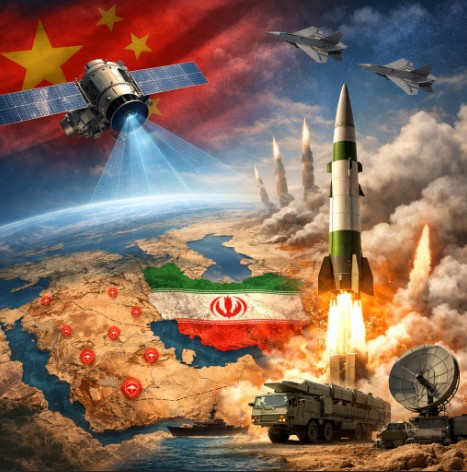
China Appeals for Restraint in Middle East, Citing...
China’s Foreign Ministry has issued a formal appeal urging both Washington and Tehran to...
-
'False and Fabricated': KP Administration Slams Re...
Khyber Pakhtunkhwa Information Minister Shafi Jan has strongly denied reports that 50 PTI ...

-
Backtracking in Lahore: Punjab Government Abruptly...
The Punjab government has quietly deferred its decision to restore the pre-Partition histo...

-
Finger on the Trigger': Iran’s Mohsen Rezaei Say...
Iran’s military adviser Mohsen Rezaei has claimed that war-ending talks with the United ...
.jpg)