TRADE & ECONOMY
Detailed Report
-
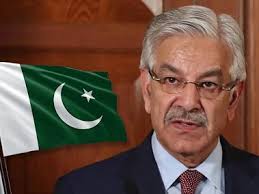
Economy Stabilized Beyond Insolvency: Speaking on the floor of the National Assembly on Tuesday, June 16, 2026, Defense Minister Khawaja Asif declared that Pakistan's economy has successfully exited the "intensive care unit (ICU)." Reflecting on the administration's initial fiscal fragility, Asif acknowledged that the state faced an imminent threat of sovereign default before being stabilized by stringent IMF structural frameworks. While noting that the public is still bearing the weight of those tight conditions, he asserted that solvency has been restored, mapping out a clear trajectory to achieve a 6% to 7% GDP growth rate within the next 24 months.
-
Taxation Strategy Reimagined: Addressing long-standing fiscal grievances, the Defense Minister criticized the country's web of "inbuilt taxes," characterizing high, prohibitive tax rates as drivers of evasion. Asif advocated for a structural overhaul to lower rates to a conducive, pride-driven threshold. He questioned the logic of forcing citizens to seek loopholes, urging parliament to create a business-friendly environment where individuals are incentivized to pay taxes willingly.
The U.S.-Iran Peace Dividend & Balochistan: Highlighting Islamabad's pivotal role alongside Qatar in brokering the landmark U.S.-Iran Geneva accord, Asif praised the prime minister and military leadership for pulling off what initially seemed an impossible diplomatic feat. The Defense Minister sharply pointed out that while Indian Prime Minister Narendra Modi publicly congratulated U.S. President Donald Trump on the peace pact, he intentionally omitted any mention of Pakistan's extensive mediation. Asif emphasized that Pakistan—and specifically the security-challenged province of Balochistan—stands to be the primary beneficiary of the lifted sanctions on Iranian oil and gas infrastructure, which could act as a catalyst to help resolve the region's decades-old security grievances through collective parliamentary solutions.
-
Mustafa Kamal Takes Aim at the 'Flawed' NFC Formula: Earlier in the budget session, Health Minister Mustafa Kamal (representing the MQM-P) delivered a scathing critique of the current National Finance Commission (NFC) award distribution matrix. Kamal lambasted the system for being 82% population-based, noting that it actively disincentivizes provinces from pursuing family planning. He highlighted that under this current setup, Balochistan is structurally penalized with the lowest funding share due to its sparse population, whereas a neighboring country (referencing India) assigns only a 17% weightage to population, prioritizing revenue generation, regional backwardness, and performance metrics instead.
-
The Impending Demographic Crisis: The Health Minister warned that if Pakistan’s unchecked population trajectory continues, the state will face a catastrophic infrastructure deficit. He estimated that the country would urgently need 64,000 new primary schools, 135,000 new hospital beds, and 65 million new jobs—demands that the national budget lacks the capacity to finance. To counter this, Kamal proposed integrating a mandatory 32% fiscal incentive for provinces that successfully implement population control measures, while strongly lauding the federal government’s budget proposal to completely abolish the 18% sales tax on contraceptives.
-
No New Taxes: Chief Minister Maryam Nawaz Approves...
Punjab Chief Minister Maryam Nawaz Sharif has chaired the 35th provincial cabinet meeting ...
.jpg)
-
U.S.-Iran Peace Pact Offers Fiscal Upside to Pakis...
Finance Minister Muhammad Aurangzeb has stated that while the newly signed U.S.-Iran peace...
-
Industrial Stimulus: Pakistan Slashes Customs Duti...
The federal government has slashed customs duties on over 7,500 industrial raw materials a...
-
Federal Budget FY2026–27: Rs10 Billion Allocated...
The federal government has allocated Rs10 billion for Karachi’s K-4 water project and Rs...
-
Rs17 Trillion Outlay: Govt Balances Rs360 Billion ...
The federal government’s FY2026–27 budget sets a strict Rs15.264 trillion FBR tax targ...