POLITICS & POLICY MAKING
Talks Will Only Be Held in Pakistan, Nowhere Else; We Trust Pakistan, Not the US," Says Iranian Ambassador
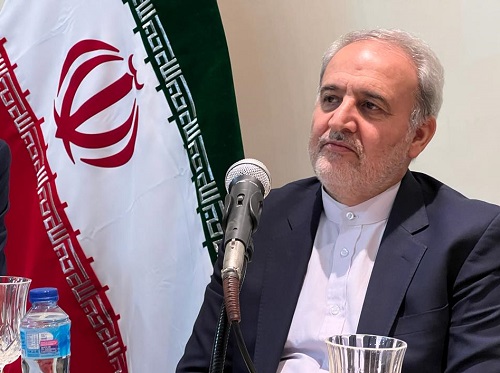
During an address at the Islamabad Policy Research Institute (IPRI), the Iranian Ambassador to Pakistan, Reza Amiri Moghadam, delivered a high-stakes diplomatic briefing, reaffirming Tehran's deep-rooted trust in Pakistan while sharply criticizing American reliability.
Pakistan as the Sole Trusted Mediator
Ambassador Moghadam officially declared that any future negotiations regarding regional stability or international disputes will take place exclusively on Pakistani soil. He emphasized that Iran views Pakistan as a neutral and highly reliable mediator, contrasting this with the United States, which he labeled as an untrustworthy actor. "We trust Pakistan, not the US," the envoy stated, while praising Pakistan's persistent diplomatic efforts and its role as a bridge for peace.
Defense of Sovereignty and Nuclear Program
Addressing regional concerns, the Ambassador clarified that Iran does not seek regional hegemony but is strictly focused on safeguarding its own sovereignty. He reiterated that Iran’s nuclear program is entirely peaceful, noting that no evidence of weaponization has ever been produced. He further highlighted that the International Atomic Energy Agency (IAEA) has repeatedly verified that Iran is not developing nuclear weapons.
Resistance Against External Pressure
Reflecting on the history of the Islamic Republic, Moghadam noted that Iran has faced continuous pressure from the United States and "Zionist forces" for 47 years following the 1979 Revolution. Despite decades of economic and political coercion, he asserted that these efforts have failed to break the Iranian spirit, stating that the nation remains united and strong despite significant human and financial losses.
Criticism of US and Israeli Roles
The Ambassador accused Israel of seeking dominance in the Middle East with the full backing of Washington. He shared a critical grievance regarding the diplomatic process, claiming that the U.S. launched sudden attacks during active negotiations, which severely damaged the diplomatic atmosphere and hindered progress toward peace.
-
Strait of Hormuz Closed Again: Iran Resumes "Stric...
The Strait of Hormuz is closed once again. ⚓ In a major escalation today, April 18, 2026...

-
Barrister Gohar Pushes for Bushra Bibi’s Release...
Barrister Gohar has stepped up efforts for Bushra Bibi’s release and has reportedly pers...
.jpg)
-
Four LNG Cargoes to Arrive Within Five Days, Loads...
Four LNG shipments expected soon, easing Pakistan’s power crisis...

-
Reopening: Iran Partially Restores Airspace for In...
Aviation Update: The Civil Aviation Organization of Iran (CAO) has issued a NOTAM official...

-
Field Marshal Asim Munir Concludes Strategic Tehra...
Mission Accomplished. 🇵🇰🇮🇷 Field Marshal Asim Munir concludes his 3-day diplom...