POLITICS & POLICY MAKING
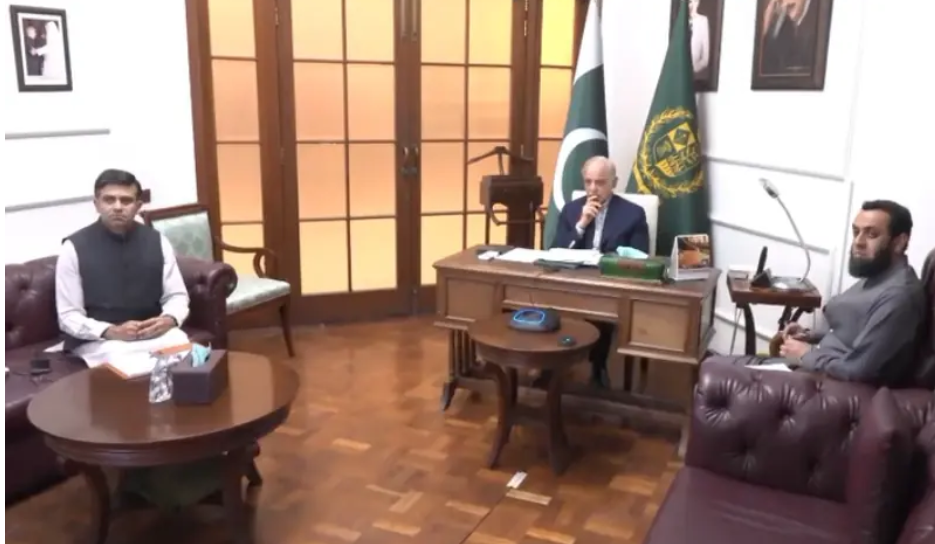
The government has decided to implement salary reductions ranging from five to 30 per cent for employees of state-owned enterprises (SOEs) and autonomous institutions operating under government patronage as part of a broader austerity plan aimed at easing economic pressure on the public.
The decision was taken during a meeting chaired by Prime Minister Shehbaz Sharif on Saturday to review the impact of rising petroleum prices and the implementation of austerity measures amid ongoing geopolitical tensions in the Middle East.
According to a statement issued by the Prime Minister's Office of Pakistan, the savings generated through these measures will be directed exclusively toward public relief initiatives.
The salary cuts for SOE employees mirror similar reductions previously announced for government officials as part of the administration’s broader effort to reduce public expenditures during the ongoing economic strain caused by global energy price volatility.
High-Level Meeting Reviews Economic Impact
The meeting was attended by key cabinet members including Finance Minister Muhammad Aurangzeb, Petroleum Minister Ali Pervaiz Malik, Information Minister Attaullah Tarar, and Minister of State for Finance Bilal Azhar Kayani. Chairman of the Federal Board of Revenue, Rashid Mahmood Langrial, along with other senior officials, also participated in the session.
During the review, the government confirmed that certain departments would remain exempt from previously announced work-hour adjustments. Law enforcement agencies and the FBR will continue operating under normal working schedules and will not adopt the four-day work week introduced for other government offices.
Additional Cost-Cutting Measures
Officials also reviewed the progress of previously announced austerity measures. These include grounding 60 per cent of government vehicles and reducing fuel allocations for official transport by 50 per cent across all government departments.
A third-party audit will be conducted within the next two months to evaluate the implementation and effectiveness of these measures.
The meeting also reiterated a complete ban on the purchase of new government vehicles and other non-essential government procurements.
In addition, cabinet members, federal ministers, advisers and special assistants to the prime minister have agreed to contribute their next two months’ salaries toward public welfare funds.
Restrictions on Official Travel
As part of the austerity plan, the government has also imposed strict limits on official foreign travel. Ministers, advisers and special assistants have been directed to avoid overseas visits and instead conduct meetings through teleconferencing or virtual platforms.
Prime Minister Shehbaz Sharif also ordered that Pakistani embassies around the world mark the upcoming Pakistan Day celebrations on March 23 with simplicity to reduce public expenditure.
The premier instructed government secretaries to closely monitor the implementation of these austerity measures and submit daily progress reports to the review committee.
Global Oil Crisis Impact
The government’s austerity push comes amid a surge in global energy prices following the ongoing conflict involving the United States, Israel and Iran. The closure of the Strait of Hormuz has triggered significant volatility in global oil markets, affecting economies worldwide, including Pakistan.
Last week, the government raised petrol and high-speed diesel prices by Rs55 per litre due to rising international oil prices. However, the administration later decided to keep fuel prices unchanged during the most recent weekly review despite continued fluctuations in global markets.
Petroleum Supply Situation
In a separate virtual meeting, a government committee tasked with monitoring petroleum prices reviewed national fuel reserves and supply arrangements. The session was chaired by Finance Minister Muhammad Aurangzeb.
Officials from the Ministry of Finance Pakistan reported that petroleum product stocks across the country remain at comfortable levels and that supply chains are functioning smoothly.
The committee was briefed on crude oil inventories, ongoing import arrangements and shipments currently en route to Pakistan. Authorities also discussed logistics operations, refinery throughput and maritime supply routes to ensure uninterrupted fuel availability.
Participants were also informed that current and planned imports are expected to adequately meet domestic demand for petrol, diesel, aviation fuel and liquefied petroleum gas in the coming weeks.
Monitoring Global Energy Markets
The committee also reviewed international oil market trends, noting increased volatility caused by geopolitical tensions in the region.
Officials said the government is closely monitoring global developments while conducting scenario planning to safeguard Pakistan’s energy security and economic stability.
To improve oversight of petroleum supplies, the government is also developing a digital monitoring dashboard that will allow authorities to track fuel stocks, depots and retail supply levels in real time.
Finance Minister Aurangzeb emphasized that ensuring uninterrupted fuel availability while minimizing the burden on the public remains the government’s top priority.
He added that authorities would continue closely monitoring international markets and domestic supply conditions to respond quickly to any potential disruptions.
-
Democrats Panel Wins Key Posts in National Press C...
Democrats panel claims President and Secretary posts at National Press Club elections, whi...

-
President Zardari Condemns Afghan Taliban Drone At...
President Asif Ali Zardari condemns Afghan Taliban drone attacks targeting civilian areas ...
-
China Urges Pakistan and Afghanistan to Resolve Te...
China has called on Pakistan and Afghanistan to resolve their disputes through dialogue an...
-
Nehal Hashmi Appointed Governor of Sindh, Approved...
President Zardari approves Nehal Hashmi as Sindh Governor on PM’s advice. Hashmi returns...
-
FBR Tightens Cybersecurity Measures Amid Rising Th...
FBR ramps up cybersecurity with geo-fencing, real-time monitoring, and strict access contr...
