LEGAL
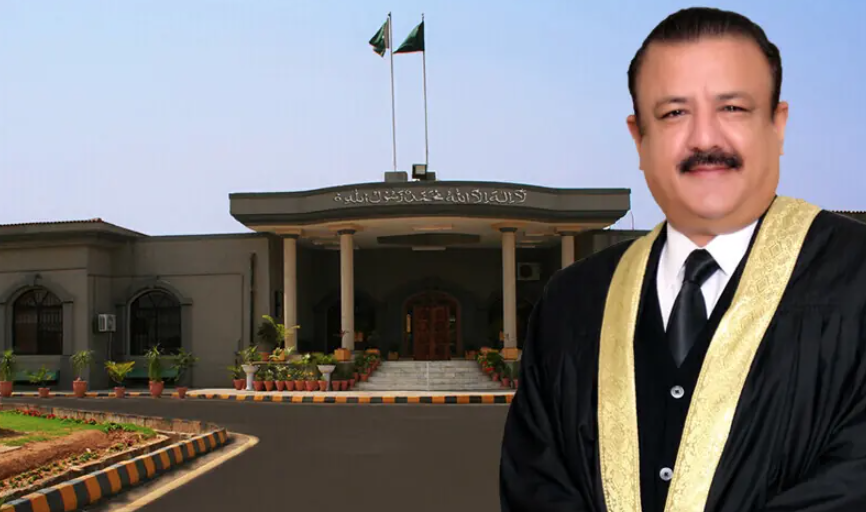
The Islamabad High Court (IHC) has issued a 116-page detailed decision in the case concerning Justice Tariq Mahmood Jahangiri, declaring his appointment as a judge null and void. The decision, authored by Justice Azam Khan, underscores the principle that judicial independence does not place judges above accountability.
The court emphasized that a judge lacking competence, ability, or legal qualifications cannot retain office. “Such removal is necessary to maintain the independence of the judiciary. Accountability does not weaken institutions; it strengthens them,” the judgment stated. The decision noted that access to justice is meaningless without an independent, competent, and trustworthy judiciary.
The ruling criticized appointments based on administrative approval or verification as insufficient substitutes for meeting constitutional standards. “A lawyer’s license cannot remove deficiencies in basic education. Without a valid and legal LLB degree, the appointment is invalid from the beginning,” the judgment said.
The IHC further explained that wrongful appointments weaken the judicial structure and undermine public trust. Transparent appointment processes and adherence to constitutional qualifications are essential to safeguard the fundamental right to justice.
Declaring Tariq Jahangiri’s appointment null and void, the court reinforced that only legally qualified individuals can hold judicial office. The ruling reiterates that courts exist to serve society, not for the convenience of judges, and that adherence to legal and constitutional standards is paramount to protecting judicial independence.
-
Canadian Doctoral Student Arrested in Pakistan Ove...
Lahore police and NCCIA take Canadian doctoral student Hamza Ahmad Khan into custody over ...

-
IHC Reaffirms Chief Justice as Sole “Master of t...
Islamabad High Court rules July 2025 Aafia Siddiqui order invalid, reaffirming that only t...
-
Lahore High Court Nullifies DRC Decisions Under Pu...
Lahore High Court declares all decisions of Dispute Resolution Committees under the Punjab...
-
Supreme Court Stays Trial Court Proceedings Agains...
The Supreme Court of Pakistan stays Lahore trial court proceedings against Imran Khan in t...
-
Supreme Court Declares Blocking of Identity Cards ...
The Supreme Court of Pakistan rules that blocking a citizen’s identity card is illegal, ...