TRADE & ECONOMY
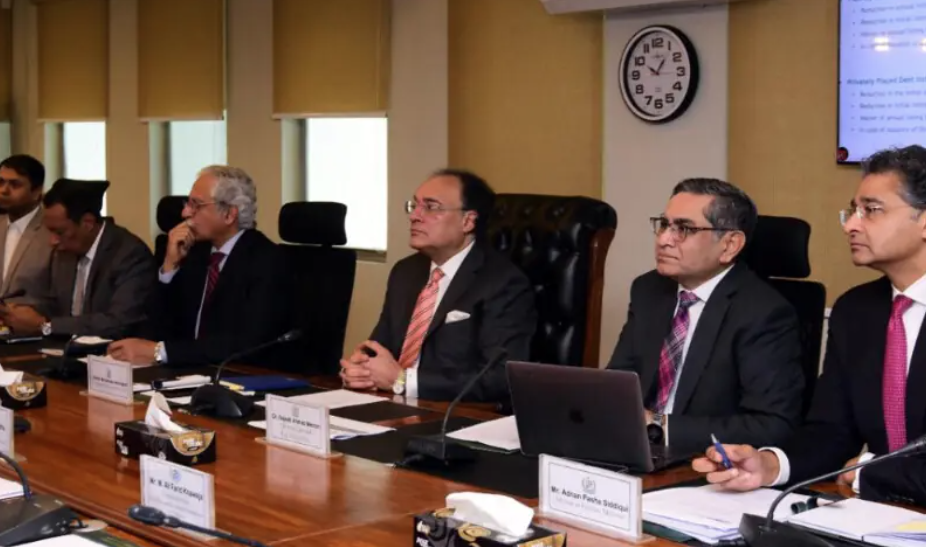
The International Monetary Fund (IMF) has confirmed that it was unable to reach a staff-level agreement with Pakistan during the latest round of talks on the third review of the country’s $7 billion bailout programme, although both sides made significant progress and discussions will continue.
In its end-of-mission statement issued on Thursday, the IMF said its team, led by Iva Petrova, held detailed discussions with Pakistani authorities regarding the third review of the $7 billion Extended Fund Facility (EFF) and the second review of the 28-month Resilience and Sustainability Facility (RSF).
The IMF mission conducted meetings in Karachi and Islamabad as well as virtually between February 25 and March 11.
According to Petrova, while negotiations did not conclude with a staff-level agreement, “considerable progress” was achieved during the discussions. She added that talks will continue in the coming days as both sides assess the impact of recent global developments on Pakistan’s economy and the ongoing IMF-supported programme.
The IMF noted that Pakistan’s implementation of the programme under the EFF has remained broadly in line with commitments made by the authorities through the end of February.
Officials from both sides discussed several key policy areas, including sustaining fiscal consolidation to strengthen public finances and maintaining a tight monetary policy to keep inflation within the target range set by the State Bank of Pakistan. The discussions also focused on advancing reforms aimed at improving the financial viability of the country’s energy sector.
In addition, the IMF and Pakistani authorities emphasized the importance of deepening structural reforms to accelerate economic growth. These reforms include strengthening social protection programmes while gradually rebuilding spending on health and education.
The IMF also acknowledged that Pakistan has made good progress in implementing reforms designed to strengthen climate resilience, particularly through measures undertaken under the RSF programme.
Another key topic during the talks was the impact of geopolitical tensions and global economic uncertainty on Pakistan’s economic outlook. The IMF highlighted concerns over the effects of the conflict in the Middle East, which has contributed to volatile energy prices and tighter global financial conditions.
These external pressures could influence Pakistan’s balance of payments and increase the country’s external financing requirements in the near term.
The IMF mission began discussions with Pakistani officials on February 25 as part of the ongoing review process for the EFF and RSF programmes. Some of the meetings later moved online after the escalation of tensions in the Middle East, including the US–Israel strikes on Iran.
If the review is successfully completed in the coming weeks, Pakistan will become eligible to receive approximately $1 billion (about 760 million Special Drawing Rights) under the EFF programme and an additional $200 million under the RSF facility by the end of April.
The IMF and Pakistani authorities have indicated that negotiations will continue in the coming days with the aim of finalizing the review and moving toward a staff-level agreement.
-
Pakistan Bans Petroleum Exports, Holds Prices Desp...
Govt bans petroleum exports and aims to shield citizens from further price hikes, using em...

-
Pakistani Airlines Raise Fuel Surcharges Amid Gulf...
Fuel costs surge 34% after the Gulf war disrupts regional air routes, prompting Pakistan I...

-
Fauji Fertilizer Joins Consortium for PIA Privatiz...
Pakistan’s Privatization Committee approves Fauji Fertilizer Company as an additional co...

-
Pakistan Diverts Oil Imports via Red Sea Amid Stra...
Pakistan is now receiving oil via the Red Sea due to the Strait of Hormuz closure. A PNSC ...
-
Aurangzeb Calls for Stronger Capital Markets to Re...
Finance Minister Muhammad Aurangzeb says Pakistan must move toward a balanced financial sy...