WORLD NEWS
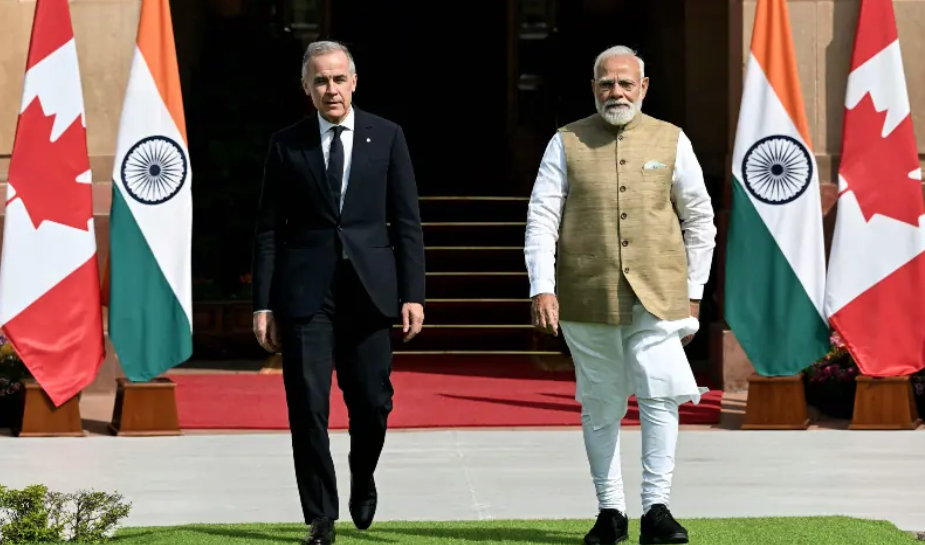
India and Canada reached a series of agreements on Monday, including critical mineral cooperation and a “landmark” uranium supply deal, strengthening nuclear energy, trade, and defence partnerships between the two nations.
The agreements were announced following talks between Indian Prime Minister Narendra Modi and Canadian Prime Minister Mark Carney in New Delhi. Modi described the relationship as infused with “new energy, mutual trust, and positivity,” signaling a significant reset after a sharp deterioration in 2023. That year, Ottawa accused New Delhi of orchestrating attacks against Sikh activists in Canada—a claim India rejected.
“This is not merely the renewal of a relationship. It is the expansion of a valued partnership with new ambition, focus, and foresight,” Carney said, highlighting efforts to diversify Canadian trade beyond the United States.
Nuclear and Energy Cooperation
India, the world’s most populous country with 1.4 billion people, aims to expand its nuclear power capacity from 8 gigawatts to 100 gigawatts by 2047. Modi announced a long-term uranium supply deal and plans for collaboration on small modular and advanced nuclear reactors. Carney described the agreement as part of a “strategic energy partnership” valued at $1.9 billion, supporting India’s nuclear ambitions.
Canada will also supply liquefied natural gas (LNG) and assist India in accessing critical minerals for clean technology and manufacturing.
Trade and Economic Cooperation
The countries aim to resume negotiations on the Comprehensive Economic Partnership Agreement (CEPA), targeting $50 billion in bilateral trade. Modi emphasized that the pact would open “new opportunities to invest and create jobs in both countries.” Carney said he hopes to finalize the agreement by the end of the year to reduce barriers and increase trade certainty.
Canadian pension and wealth funds have already invested $73 billion in India, reflecting growing economic ties.
Defence and Security Partnership
In addition to economic and energy deals, the leaders agreed to renew security cooperation through a new defence partnership, signaling broader collaboration beyond trade and energy.
Historical Context
Relations had collapsed in 2023 following the killing of Hardeep Singh Nijjar, a Canadian citizen advocating for an independent Sikh state. Both nations expelled diplomats, and ties remained strained until Carney took office in March 2025. Diplomatic engagement has since improved, with restored envoys and renewed dialogue.
Following his India visit, Carney will travel to Australia and Japan as part of Canada’s strategy to diversify economic partnerships and reduce dependence on the United States, which accounts for over 75% of Canadian exports.
The agreements mark a significant step in rebuilding trust and expanding bilateral cooperation between India and Canada across nuclear energy, trade, minerals, and security.
-
Saudi Embassy Denies Pressuring Trump Over Iran St...
Saudi Arabia rejects claims it influenced US attack on Iran, emphasizing support for diplo...

-
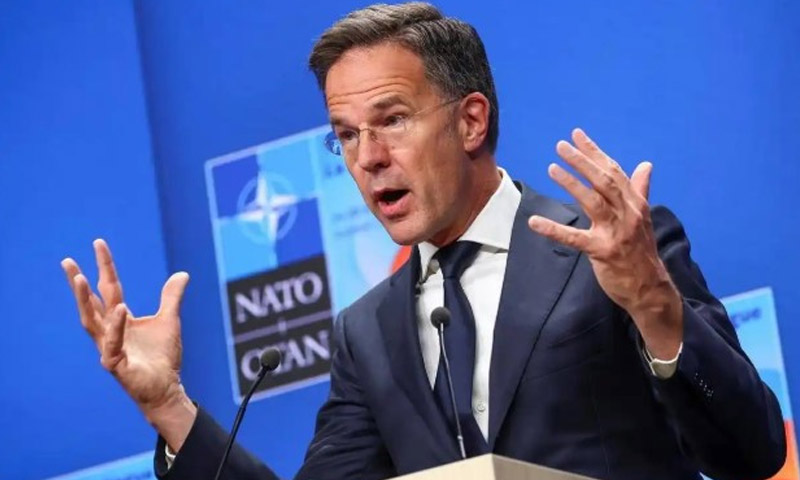
NATO Rules Out Military Action Against Iran, Empha...
NATO Secretary General states the alliance will not engage militarily in Iran, calling for...
-
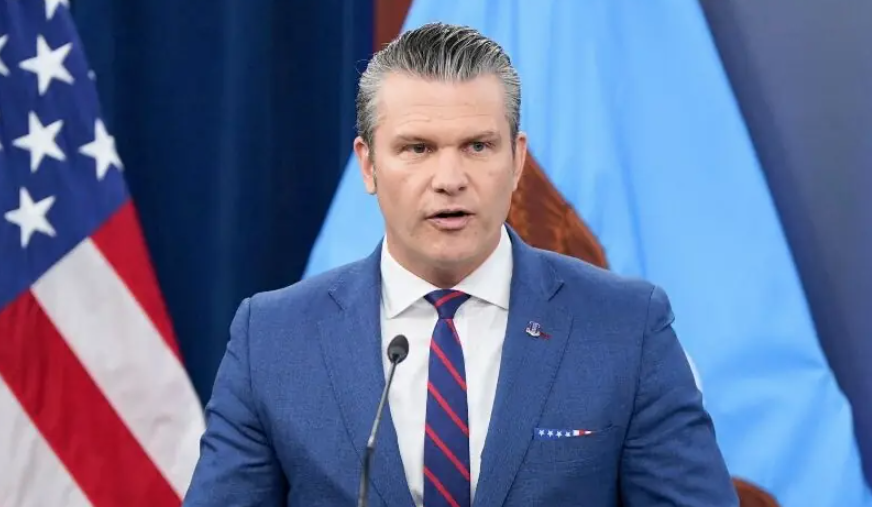
US Confirms Coordinated Strikes on Iran, Targets 1...
US Defense Secretary Pat Hegseth confirms US-Israel joint operation on Iran, hitting 1,000...
-
Israel Targets Hezbollah’s Sheikh Naim Qassem, A...
Israeli Defense Minister Israel Katz declares Hezbollah deputy leader Naim Qassem as a mar...
-
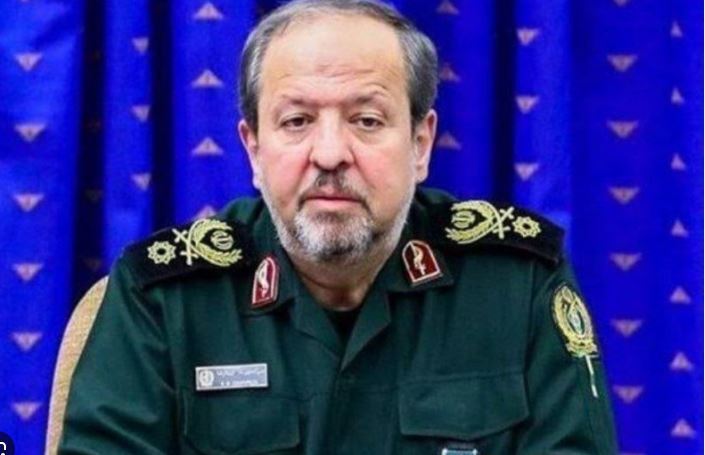
Iran Names IRGC General as Acting Defense Minister...
Iranian President Masoud Peshkerian names Majid Ibn Reza as acting defense minister follow...