POLITICS & POLICY MAKING
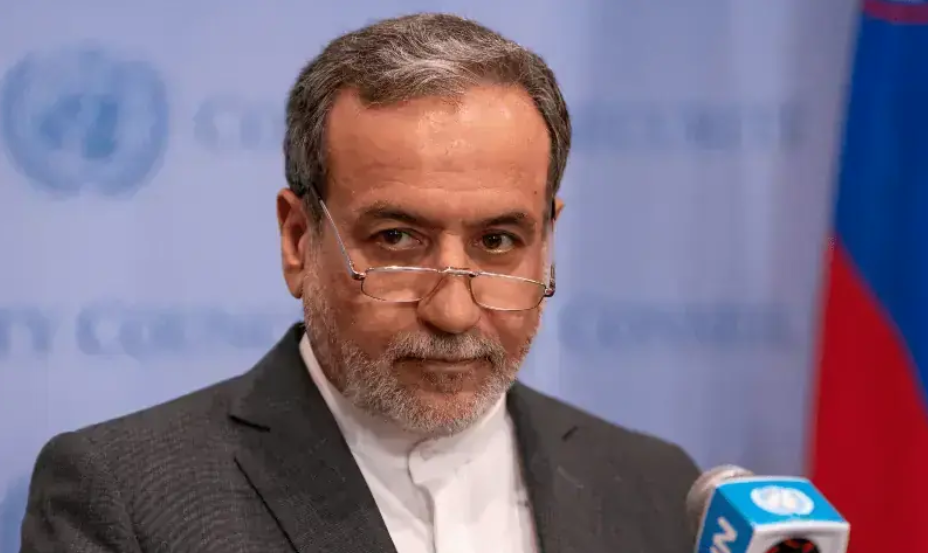
Abbas Araghchi, the foreign minister of Iran, on Monday expressed gratitude to the government and people of Pakistan for their strong support and solidarity amid the ongoing conflict involving the United States and Israel.
In a post written in Urdu on the social media platform X (formerly Twitter), Araghchi thanked Pakistan for standing with Iran during what he described as aggression against the Islamic Republic.
“On this blessed, divine, and spiritual day and hour, I extend my heartfelt gratitude to the government and people of Pakistan for their strong expression of solidarity and support with the people and government of the Islamic Republic of Iran in the face of aggression by America and the Zionist regime,” Araghchi wrote.
The Iranian foreign minister added that Iran remained resolute in defending its sovereignty and territorial integrity, saying the country stood with “steadfastness and perseverance with complete reliance on Allah Almighty.”
Regional Conflict Escalation
Araghchi’s message comes amid an ongoing Middle East conflict that began with US-Israeli strikes on Iran on February 28. The strikes reportedly resulted in the assassination of Ali Khamenei, Iran’s supreme leader, significantly escalating tensions across the region.
In response, Iran launched retaliatory attacks targeting US military assets and bases in Gulf countries, raising fears of a wider regional confrontation.
Pakistan’s Diplomatic Role
Pakistan has sought to maintain a balanced diplomatic stance during the crisis. The Ministry of Foreign Affairs of Pakistan has described Islamabad’s role as that of a “bridge builder” between conflicting parties.
According to Ishaq Dar, Pakistan’s deputy prime minister and foreign minister, Islamabad invoked its Strategic Mutual Defence Agreement with Saudi Arabia to help deter potential large-scale Iranian strikes against the kingdom.
Meanwhile, Shehbaz Sharif, the prime minister of Pakistan, has been actively engaging with regional and international leaders through diplomatic contacts, urging de-escalation and a return to negotiations.
On March 12, Sharif also paid a brief visit to Saudi Arabia, where he held a meeting with Mohammed bin Salman, the Saudi crown prince, to discuss the evolving regional situation.
Position at the United Nations
At the United Nations Security Council, Pakistan has attempted to maintain a delicate diplomatic balance by condemning attacks on Iran while simultaneously expressing solidarity with Gulf states and calling for restraint.
Last week, Pakistan supported a Bahrain-led resolution condemning Iran’s retaliatory attacks, which was adopted by the council. Islamabad also voted in favour of a draft resolution presented by Russia regarding the military escalation, though the proposal was ultimately vetoed by the United States.
Diplomatic observers say Pakistan’s approach reflects its effort to balance relations with Iran, Gulf allies, and Western partners while advocating for a peaceful resolution to the conflict.
-
China Offers to Mediate as Pakistan-Afghanistan Bo...
China has offered to mediate between Pakistan and Afghanistan to ease border tensions, urg...
-
Democrats Panel Wins Key Posts in National Press C...
Democrats panel claims President and Secretary posts at National Press Club elections, whi...
-
President Zardari Condemns Afghan Taliban Drone At...
President Asif Ali Zardari condemns Afghan Taliban drone attacks targeting civilian areas ...
-
Government Announces 5–30% Salary Cuts for SOE E...
Pakistan govt announces 5–30% salary cuts for employees of state-owned enterprises and a...
-
China Urges Pakistan and Afghanistan to Resolve Te...
China has called on Pakistan and Afghanistan to resolve their disputes through dialogue an...