POLITICS & POLICY MAKING
Detailed Report
-
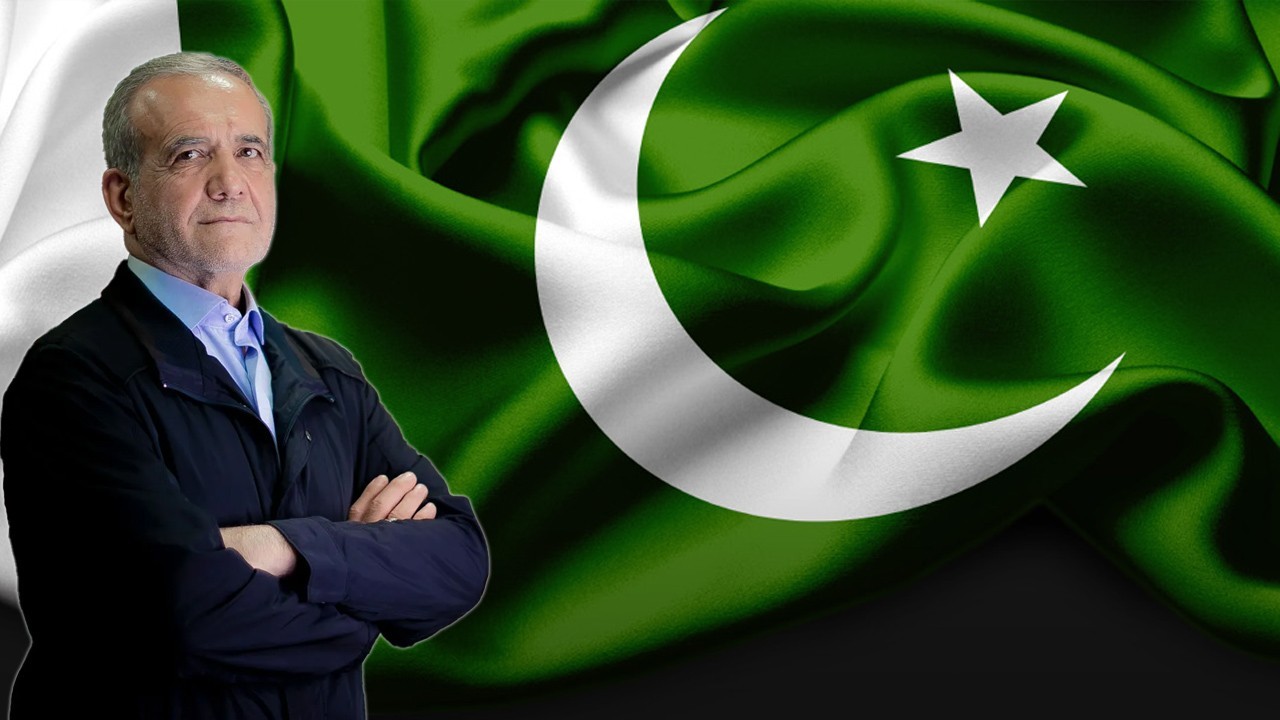
The High-Profile Visit: Iranian President Dr. Masoud Pezeshkian is arriving in Pakistan today, Tuesday, June 23, 2026, for an official state visit following a formal invitation from Prime Minister Shehbaz Sharif. According to the Ministry of Foreign Affairs (FO), this marks Pezeshkian’s second official visit to Pakistan since assuming the Iranian presidency. The visiting dignitary is scheduled to hold critical bilateral talks with PM Shehbaz and meet with President Asif Ali Zardari. Additionally, high-level state figures including Deputy Prime Minister and Foreign Minister Ishaq Dar, Senate Chairman Yousuf Raza Gilani, and National Assembly Speaker Ayaz Sadiq are slated to call on the Iranian leader.
-
Capital Lockdown and Remote Work Orders: To accommodate the tight security protocols required for the visit, the federal government has completely sealed Islamabad's Red Zone. The absolute closure has altered the administrative and judicial schedule of the capital city:
-
Judicial Disruptions: The Islamabad High Court (IHC) and the Federal Constitutional Court (FCC) have officially cancelled their Tuesday cause lists. Judges and court staff have been ordered to work remotely from home.
-
Bureaucracy Transfers: The Cabinet Division issued a "work from home" directive for all non-essential ministries and divisions operating inside the Red Zone. Autonomous bodies inside the zone have been granted a full holiday. Essential entities—including the PM Office, Parliament, the Foreign Office, and the Finance Ministry—remain exempt and operational.
-
Logistical Halts: Capital police closed all major public transit hubs, including the Faizabad and Chongi No. 26 bus terminals, until the delegation's departure. Furthermore, Islamabad District Magistrate Irfan Nawaz Memon ordered the immediate closure of all public hiking tracks, including Trails 2, 3, 4, and 5.
-
-
Review of Bilateral Vectors: The Foreign Office indicated that this trip provides a vital window for both neighboring countries to review the full spectrum of their bilateral relations. Given the ongoing implementation of the Islamabad MoU, the leadership will hold localized, strategic sessions to align their cross-border interests. Key parameters under review include evaluating the framework for regional trade enhancements, managing volatile border security zones, expanding mutual energy transfer networks, and cementing overarching infrastructure connectivity projects to maintain long-term regional stability.
-
U.S. Enacts 60-Day Iran Sanctions Waiver as Trump ...
The U.S. has issued a 60-day sanctions waiver allowing Iran to sell oil, following breakth...
-
'Denuclearization Off the Table': Kim Jong Un Vows...
North Korean leader Kim Jong Un announced at a Workers' Party Central Committee meeting th...

-
'No Return to Pre-War Status': Ghalibaf Asserts Ir...
Iran’s chief negotiator Mohammad Bagher Ghalibaf has announced that the Strait of Hormuz...
-
New Delhi and Abu Dhabi in Fast-Track Talks Over P...
India is in advanced, unpublicized talks to sell its supersonic BrahMos cruise missiles an...

-
'Talks Are the Only Solution': PTI Chairman Barris...
PTI Chairman Barrister Gohar has welcomed Prime Minister Shehbaz Sharif's dialogue offer, ...