WORLD NEWS
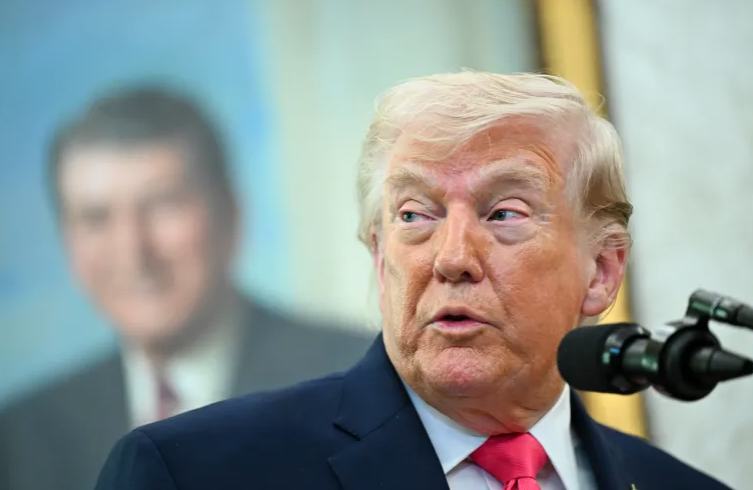
One month into the US-Israeli war on Iran, the American public has grown increasingly uneasy, but lawmakers show little inclination to curb President Donald Trump’s military actions.
Polls indicate widespread disapproval of the conflict. A Reuters/Ipsos survey released Wednesday showed 61% of Americans disapprove of US military action in Iran, compared with 35% approval. Meanwhile, Trump’s overall approval rating has dropped to 36%, the lowest of his second term. An AP-NORC Center poll similarly found 59% of Americans think the US response has been excessive.
Despite rising public concern and the knock-on effect of higher petrol prices, Congress remains largely unwilling to rein in Trump. The Republican-controlled Senate again failed to pass a War Powers resolution this week, which would have limited Trump’s authority to conduct military operations unilaterally. The vote mirrored the March 4 result, 53-47 along party lines, with Rand Paul the only Republican voting in favor and Jon Fetterman the sole Democrat against.
Even in the House, which Democrats narrowly control, leadership has hesitated to hold a vote on a similar War Powers resolution, reflecting fears of forcing party members to take positions beyond “token opposition,” according to Jamal Abdi, president of the National Iranian American Council.
Trump has yet to articulate a clear endgame for the war, instead citing the degradation of Iranian military capabilities and the elimination of top officials. Analysts warn the conflict is entering a prolonged attrition phase that strategically favors Iran, with the regime largely intact but weakened.
Republican lawmakers have broadly fallen in line with Trump, celebrating military actions and framing the conflict as a short-term affair. Some, however, have expressed concern about funding the war, with Secretary of Defense Pete Hegseth’s $200 billion request drawing criticism from MAGA-aligned members like Lauren Boebert and Eric Burlison. Others, including Senator Lindsey Graham, have proposed legislative mechanisms to pass war funding more easily.
Within the MAGA movement, war support remains high. An NBC poll cited by the White House showed 90% of self-identified MAGA voters support the conflict. Yet prominent figures such as Tucker Carlson and Megyn Kelly have voiced strong opposition, warning the war contradicts Trump’s “no forever wars” campaign promise.
Experts caution that the conflict’s political fallout will hinge on its duration and consequences. While air strikes have kept US casualties low, rising fuel prices and a prolonged conflict could erode public support, particularly if a ground invasion is pursued. Analysts say Republican lawmakers are currently betting on a short, successful military campaign to bolster Trump politically, but the calculus may shift if the war drags on.
For now, the Trump administration continues military operations while balancing domestic political risks, leaving the American public and lawmakers in a state of unease as the conflict shows no clear resolution.
-
Russia Imposes Temporary Petrol Export Ban...
Russia halts petrol exports from April 1 to July 31, 2026, to stabilize domestic fuel pric...
-
Iran Warns Neighbors Against Hosting Attacks, Stri...
Iranian President Masoud Peshmerga warns regional countries: “Don’t let enemies use yo...
-
Israeli Airstrike Kills Two Lebanese Journalists i...
Two Lebanese journalists, Ali Shoaib (Al Manar) and Fatima Ftouni (Al Mayadeen), killed in...

-
Trump Says “Cuba Is Next” Amid Rising Pressure...
President Trump warns “Cuba is next” in Miami speech, repeating threat against island ...
-
Ukraine Signs Defense Cooperation Deals with UAE a...
President Zelenskiy seals defense agreements with UAE and Qatar, sharing expertise on miss...