POLITICS & POLICY MAKING
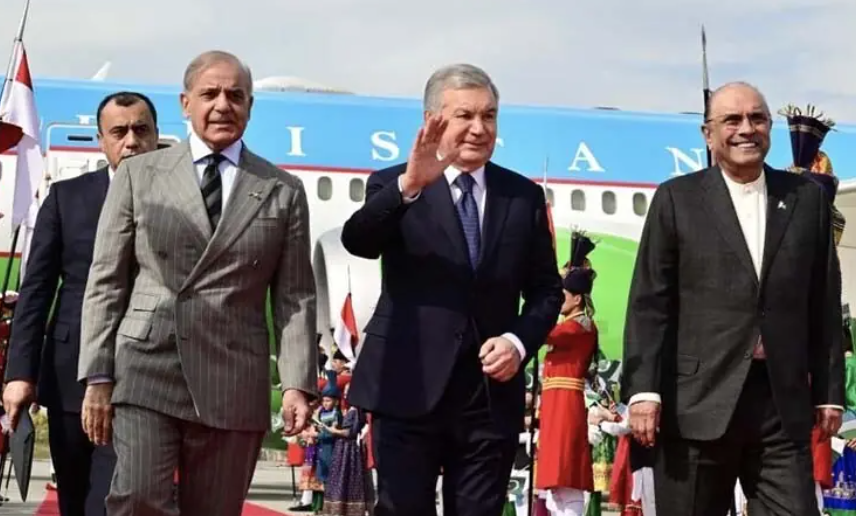
Uzbekistan President Shavkat Mirziyoyev arrived in Pakistan on Thursday for a two-day official visit, marking a significant step toward enhancing bilateral ties and regional connectivity between the two nations.
President Mirziyoyev was welcomed at Noor Khan Airbase in Islamabad by Prime Minister Shehbaz Sharif and President Asif Ali Zardari, along with Information Minister Attaullah Tarar and Special Assistant to the PM on Industry and Production Haroon Akhtar. The reception included a 21-gun salute, a static contingent salute by Pakistan armed forces, and a performance by the tri-services band, highlighting the ceremony’s grandeur.
The Foreign Office confirmed that President Mirziyoyev’s visit was at the invitation of PM Shehbaz and involves a high-level delegation of cabinet ministers and business leaders. During the visit, he is scheduled to meet President Zardari, hold delegation-level talks with the Prime Minister, and address the Pakistan-Uzbekistan Business Forum.
This visit marks the Uzbek president’s second official trip to Pakistan, following his previous visit in 2022. According to the Foreign Office, the visit “reflects the upward trajectory in Pakistan-Uzbekistan bilateral relations and the brotherly ties between the two brotherly countries, rooted in common history, faith, and aspirations for peace and prosperity in Central and South Asia.”
Pakistan and Uzbekistan have been strengthening economic and trade ties in recent years. In 2023, the two countries signed a $1 billion trade deal, and both sides recently agreed to expand bilateral trade to $2 billion. Discussions include a roadmap for industrial cooperation and other initiatives to boost regional connectivity.
The Embassy of Uzbekistan said that President Mirziyoyev’s visit is expected to mark a “new phase in bilateral relations,” further solidifying cooperation in trade, investment, and regional development.
The visit underscores both nations’ commitment to fostering peace, stability, and prosperity across Central and South Asia while deepening historical, cultural, and economic ties.
-
PTI to Issue Show-Cause Notice to Senator Mashal Y...
PTI Chairman Barrister Gohar warns Senator Mashal Yousafzai: remarks against the founderâ€...
-
Pakistan Urges UN Security Council to Sanction Bal...
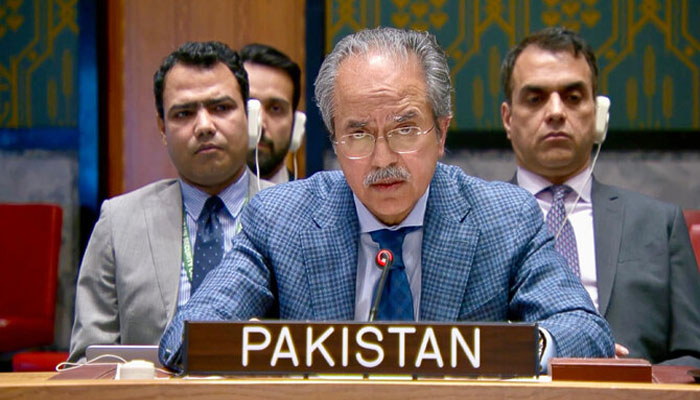
Pakistan calls on the UN Security Council to include the banned BLA on its sanctions list,...
-
Qasim Khan Urges International Intervention to Vis...
Qasim Khan says he and his brother want to visit Imran Khan, who has been in solitary conf...
-
Sindh CM Murad Ali Shah Calls for Peaceful Protest...
Sindh CM Murad Ali Shah says protests are allowed but main roads must remain clear. At Kas...
-
China Expresses Solidarity with Pakistan Against T...
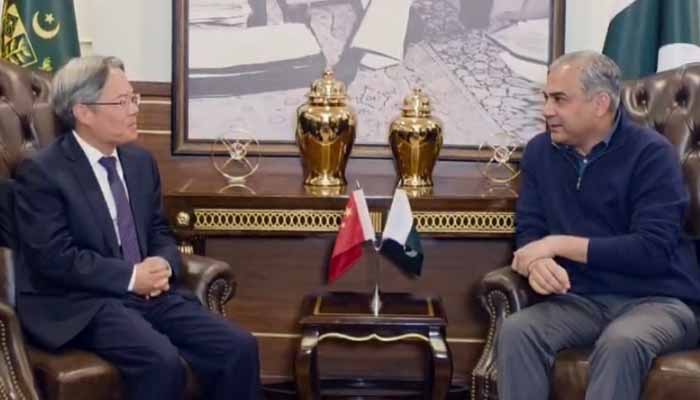
Chinese Ambassador Jiang Zedong condemns all terrorism, expresses solidarity with Pakistan...