POLITICS & POLICY MAKING

Detailed Report
-
The Missile Readiness Ultimatum: High-ranking Iranian military officials have issued a severe warning to the US-Israeli coalition, declaring that ballistic missile batteries have been primed and positioned for immediate launch. Speaking to Iranian state television on Thursday, Mohsen Rezaei, a senior military adviser to Supreme Leader Ayatollah Mojtaba Khamenei, stated that the escalation is a direct response to recent Israeli airstrikes and public threats to expand its ground invasion deeper into Beirut’s southern suburbs.
-
Lebanon Linked to Regional Settlement: Rezaei stated unequivocally that the security of Lebanon and the preservation of Hezbollah's operational capabilities remain an unalterable red line for Tehran's strategic credibility. Accusing Israel of utilizing aggressive brinkmanship in Beirut to extort leverage at the international negotiating table, the adviser made it clear that Lebanon's territorial integrity would remain central to any comprehensive diplomatic framework. He noted that any nation abandoning its regional strategic partners risks permanently bankrupting its geopolitical influence.
The Retaliatory Threat: Warning against a breakdown of current truce terms, Rezaei stated that if the Israeli military expands its invasion of Beirut, the response will eclipse previous escalations. He asserted that a renewed kinetic confrontation would expose northern Israel to operational conditions "far more difficult" than those experienced during the devastating 40-day regional war earlier this year.
-
Leveraging Hormuz and the $24 Billion Demand: To reinforce Iran's diplomatic hand, the advisory focused heavily on economic and maritime choke points. Rezaei described the strategic Strait of Hormuz—which handles roughly 20% of global oil supplies—as an absolute deterrent firmly under Iranian operational command. While conceding the waterway should remain open to routine international commerce, he warned it would not be allowed to serve as a staging ground for Western military pressure. Concurrently, Tehran introduced a massive financial condition for peace, demanding the immediate unfreezing and release of at least $24 billion in frozen Iranian financial assets as a non-negotiable step to restore baseline confidence in the stalled diplomatic process.
-
A Volatile Post-Ceasefire Landscape: The escalating rhetoric threatens to completely derail the fragile, Pakistan-mediated ceasefire that officially went into effect on April 8, 2026, following a direct military clash between the US, Israel, and Iran. Despite the active truce and ongoing US-led mediation efforts, low-intensity warfare has persisted on the ground. A parallel mid-April ceasefire inside Lebanon has also continuously deteriorated due to relentless cross-border exchanges, raising deep-seated international anxieties that a full-scale regional war could reignite.
Tehran Military & Diplomatic Red Lines (June 2026)
| Strategic Focus Area | Active Policy Directive / Military Posture | Financial & Logistical Lever |
| Beirut Threat Vector | Ballistic missile arrays fully prepped for launch. | Direct defense guarantee for Hezbollah infrastructure. |
| Northern Israel Front | Threatened retaliation designed to exceed the 40-day war. | Aimed at forcing a halt to Israel’s expanded ground invasion. |
| Maritime Deterrent | Operational control over the Strait of Hormuz. | Conditional access; prohibited for Western naval pressure. |
| Diplomatic Leverage | Demand for $24 Billion in frozen assets. | Framed as a mandatory prerequisite for successful peace talks. |
| Mediation Status | Pakistan-mediated April 8 ceasefire remains highly fragile. | Stalled over Western nuclear and territorial terms. |
-
Hormuz Reopening Set as Nuclear Dismantling Disput...
The U.S. and Iran have finalized the text of a tentative peace pact expected to be signed ...
.jpg)
-
Tehran Rejects Definitively Signed Accord; Disclos...
The Iranian Foreign Ministry has downplayed claims of a finalized peace deal with the U.S....
.jpg)
-
Dhaka Confronts New Delhi on Unlawful Deportations...
Top border officials from India and Bangladesh concluded a four-day summit in New Delhi on...
-
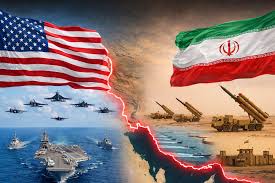
Trump Signals Imminent Weekend Peace Pact to End I...
Hopes for an end to the U.S.-Iran war grew on Friday after President Trump announced a con...
-
Pakistan, Turkiye Demand Immediate Regional Restra...
Deputy PM and Foreign Minister Ishaq Dar held an emergency phone call with Turkish Foreign...