TRADE & ECONOMY
National Assembly Clears 135 Budgetary Grants; Coalition Majority Crushes 587 Opposition Cut Motions
Detailed Report
-
The Budgetary Approval Progress: The National Assembly has entered the definitive final phase of passing the Federal Budget 2026–27, wrapping up a rigorous two-day review of departmental allocations. The ruling coalition successfully utilized its floor majority to pass 135 distinct demands for grants earmarked for various federal ministries and attached operational divisions. With the departmental spending limits legally set, the legislative house is slated to immediately transition to debating the foundational finance bill and accompanying tax adjustment protocols before enacting the complete budget into statutory law.
-
Opposition Resistance Swept Aside: The legislative process was marked by sharp resistance from the opposition benches, which mounted a coordinated procedural challenge. Opposition lawmakers submitted a total of 587 cut motions over the two-day period—including 380 structural objections on Monday alone—aimed at reducing or withholding departmental funds to register political protest. The ruling multi-party coalition systematically voted down every single motion. Simultaneously, independent observers noted that while National Assembly TV and its corresponding digital channels broadcast the opposition's floor speeches, the feed was heavily censored, with electronic audio muting applied to any verbal references to imprisoned PTI founder Imran Khan or criticisms aimed at state institutions.
-
Provincial Pressures and Agrarian Demands: Beyond federal digital policing, geographic security vacuums and the agrarian crisis took center stage. MWM lawmaker Hameed Hussain from Parachinar delivered an emotional floor speech detailing a severe local humanitarian crisis, noting that the main arterial highway connecting Parachinar to the rest of the country is restricted by security forces to a window of just two hours a day. Meanwhile, the Ministry of National Food Security and Research faced 112 cut motions. Led by PTI Chief Whip Amir Dogar, lawmakers demanded structural interventions to crush exploitative market mechanisms where farmers receive unsustainably low prices for crops while urban end-consumers simultaneously face hyper-inflated retail grocery costs. The panel demanded immediate crop insurance schemes and subsidization of chemical fertilizers.
-
The Iran-Pakistan Gas Pipeline Re-emergence: Mirroring the massive diplomatic shifts currently taking place in the capital due to the arrival of Iranian President Masoud Pezeshkian, several lawmakers utilized the floor session to commend both the civilian government and military leadership for their mediation roles in concluding the US-Iran war in Switzerland. Arguing that the newly established Burgenstock peace accord removes prior international friction, legislators demanded that the state immediately revive and expedite the long-delayed, multi-billion-dollar Iran-Pakistan (IP) cross-border gas pipeline project to rapidly resolve the country's baseline industrial energy deficits.
-
Federal Government Discontinues Target Fuel Subsid...
The federal government has ended its emergency fuel subsidy program for bikers, public tra...
-
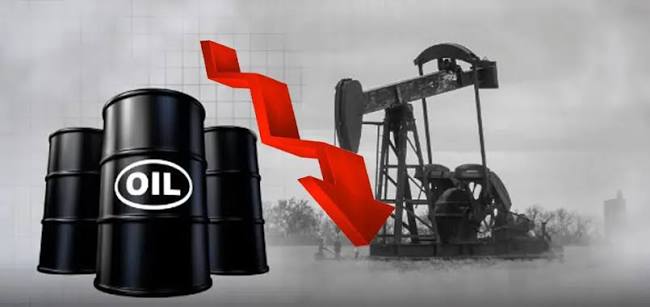
Global Oil Prices Drop 2% as U.S.-Iran Swiss Summi...
Global oil prices dropped over 2% on Monday, with Brent crude falling to $78.89 a barrel a...
-
Human Over Financial Capital: Lawmakers Urge Trans...
A cross-party panel of lawmakers and financial experts, convened by MNA Shaista Pervaiz, h...

-
PIA Handover to New Owners Set for June Deadline A...
The privatization of PIA will be fully completed before the end of June 2026, transferring...

-
Balochistan Assembly Passes Record Rs1.189Tr Fisca...
The Balochistan Assembly has passed a Rs1.189 trillion provincial budget for FY 2026–27,...