TRADE & ECONOMY
Human Over Financial Capital: Lawmakers Urge Transition From Fiscal Consolidation to Climate Adaptation

Detailed Report
-
The Cross-Party Budget Evaluation: Members of National Assembly (MNAs) alongside economic and environmental experts converged on Sunday to demand a major overhaul in Pakistan's fiscal policy. Convened by MNA Shaista Pervaiz, the legislative consultation brought together representatives from both the treasury and opposition benches to critically audit the newly presented Federal Budget 2026–27 through the prism of the United Nations Sustainable Development Goals (SDGs). The panel consensus stated that while the government's pursuit of short-term fiscal consolidation and macroeconomic stabilization is necessary under current fiscal restraints, long-term economic stability remains completely unachievable without aggressive public investment in human capital and climate defense.
-
The 2050 Demographic Shock: Highlighting the urgency of the consultation, demographic experts warned that Pakistan—already the world's fifth most populous nation—is currently on track to hit a population of nearly 400 million by 2050. Lawmakers noted that the current federal budget fails to match this rapid growth curve. They warned that without immediate, structural funding aimed at expanding school networks and medical infrastructure, this impending demographic spike risks breaking the country's already overstretched public services, housing markets, employment sectors, and natural resource reserves.
-
The Climate Resilience Imperative: Climate adaptation emerged as a central pillar of the policy debate. Experts reminded the panel that despite contributing minimally to global greenhouse emissions, Pakistan remains locked in the top tier of countries most vulnerable to catastrophic environmental shocks. Noting that recurring climate disasters now systematically damage national infrastructure, crop yields, and public health, the committee asserted that water management, resilient architecture, and disaster preparedness must be classified as permanent economic assets rather than secondary developmental projects.
-
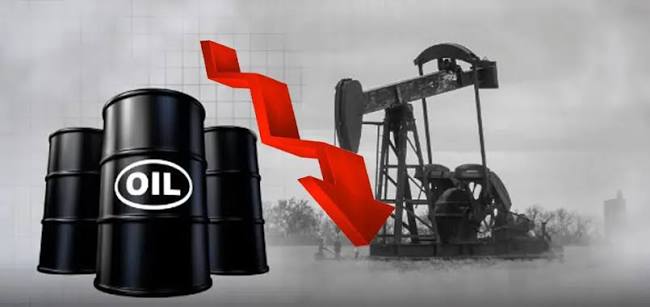
Global Oil Prices Drop 2% as U.S.-Iran Swiss Summi...
Global oil prices dropped over 2% on Monday, with Brent crude falling to $78.89 a barrel a...
-
PIA Handover to New Owners Set for June Deadline A...
The privatization of PIA will be fully completed before the end of June 2026, transferring...

-
Balochistan Assembly Passes Record Rs1.189Tr Fisca...
The Balochistan Assembly has passed a Rs1.189 trillion provincial budget for FY 2026–27,...

-
Relief for Consumers: Kerosene Oil Price Slashed b...
The federal government has slashed the price of kerosene oil by Rs48.29 per liter, bringin...
-
Pakistan Axing Machine-Readable Passports in Full ...
Pakistan is fully transitioning to biometric e-passports to eliminate identity fraud and a...