WORLD NEWS
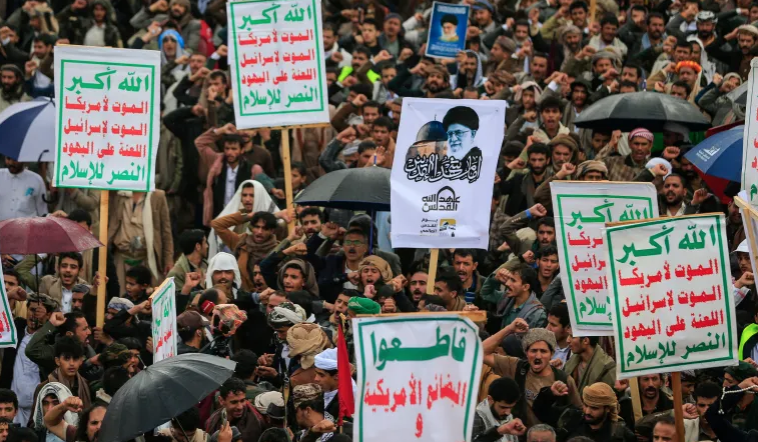
Yemen’s Houthi rebels, allied with Iran, have so far refrained from joining the ongoing regional conflict between Iran and the US-Israel coalition. Analysts warn that any Houthi involvement could destabilize the Bab al-Mandeb Strait, a key maritime chokepoint linking the Red Sea to global trade, and risk reigniting Yemen’s internal conflict.
Houthi chief Abdel-Malik al-Houthi has previously stated that his group’s “hands are on the trigger,” signaling readiness to act if Iran is attacked. Iranian officials have similarly hinted that US aggression against Iran’s oil facilities could prompt Tehran to destabilize the Red Sea.
Abdulsalam Mohammed, head of the Yemeni Abaad Studies and Research Center, said that should the Houthis enter the conflict, they would likely target energy facilities and ports in Gulf countries and obstruct shipping through Bab al-Mandeb. Such moves, he warned, could reignite Yemen’s domestic war between the Houthis and pro-government forces.
The Yemeni government, supported by Saudi Arabia, recently regained control of Aden and southern provinces, stabilizing the south and boosting confidence in a potential renewed campaign against the Houthis. Pro-government forces are reportedly better prepared militarily and could receive foreign support if fighting resumes.
Economically, disruption of Bab al-Mandeb would have dire consequences. Yemen relies on imports for 85% of its food and fuel. Mustafa Nasr, head of the Studies and Economic Media Center, warned that a shutdown of the waterway could lead to immediate price hikes and supply disruptions, leaving civilians to bear the brunt.
Laila, a 26-year-old volunteer in Sanaa, emphasized the human cost: “Any escalation would make the hungry hungrier. Families living on just three dollars a day could be pushed further into hunger if shipping risks increase prices.”
International attention has largely focused on Iran, while Yemen’s humanitarian crisis, already described by the UN as the world’s worst, continues almost unnoticed. Food scarcity, fuel shortages, and rising costs could worsen if the Houthis intervene in the conflict.
Saleh Ahmed, a bus driver in Sanaa, highlighted the personal impact: “If Bab al-Mandeb catches fire, fuel will disappear from stations, prices will rise, and livelihoods will be directly affected. We would be the first victims of the chaos.”
UN officials have warned that disruptions in key waterways, such as the Strait of Hormuz and potentially Bab al-Mandeb, could threaten food security in Yemen, Sudan, Afghanistan, and Somalia, further exacerbating global humanitarian crises.
For now, the Houthis’ restraint has prevented Yemen from becoming a direct frontline in the Iran-US-Israel conflict, but any shift could have catastrophic regional and local consequences.
-
US $100 Bills to Bear President Trump’s Signatur...
Starting this summer, US bills will carry President Trump’s signature, replacing the Tre...

-
India and Russia Deepen Energy Ties Amid Middle Ea...
India and Russia move to resume direct LNG sales & boost crude imports as Middle East tens...

-
UN Warns of Humanitarian Catastrophe in Lebanon Am...
Over 1.2M displaced as Israel intensifies strikes in Lebanon. UN warns of looming humanita...
-
Iran Rejects US Proposal, Outlines Five Conditions...
Iran says it will end the US-Israel war on its terms, sets 5 conditions including reparati...
-
US Submits 15-Point Proposal to Iran; Pakistan and...
US 15-point plan to Iran includes ending nuclear & missile programs, sanctions relief, and...