WORLD NEWS
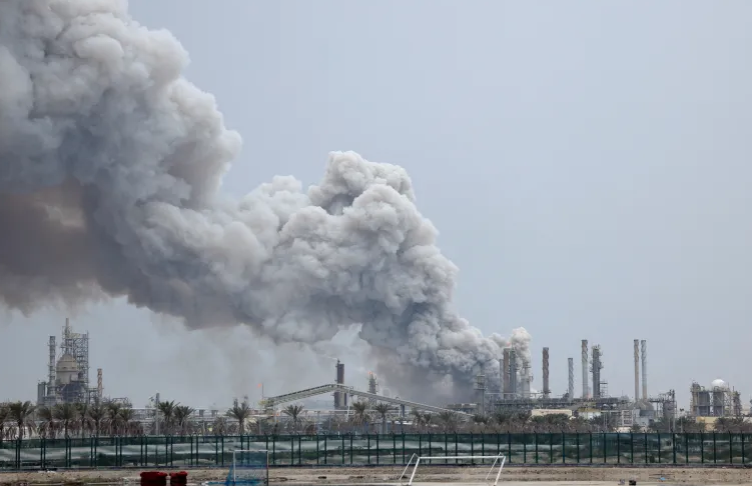
Gulf countries are facing a severe escalation in regional tensions as Iranian missiles and drones continue to target oil facilities and US assets across the region, causing widespread disruption to energy production and airspace.
Bahrain Declares Force Majeure
On Monday, Bahrain’s state-owned energy company Bapco declared force majeure on its shipments after Iranian strikes set fire to a refinery complex. A company statement said the declaration applies to group operations affected by the ongoing regional conflict and the recent attacks on its installations.
Wider Gulf Attacks
Saudi Arabia intercepted four drones heading toward the Shaybah oilfield, while the United Arab Emirates, Qatar, and Kuwait also reported missile attacks. On Sunday, a projectile in Saudi Arabia’s al-Kharj governorate killed two people and injured 12, while Bahrain reported 32 injuries, including children, during an Iranian drone attack on Sitra.
Fires were reported in the Fujairah oil industry zone in the UAE, caused by debris from intercepted drones. The attacks have disrupted oil supply and prompted airspace closures across the Gulf.
Regional and International Reactions
Saudi Arabia condemned the strikes, calling them “reprehensible” and urging an immediate halt to aggression. Qatar’s Prime Minister Sheikh Mohammed bin Abdulrahman bin Jassim Al Thani appealed for de-escalation, describing the attacks as a “sense of betrayal” given the diplomatic efforts to avoid regional conflict.
Israel and the New Supreme Leader of Iran
Israel intensified its operations in central Iran after Mojtaba Khamenei was named successor to his late father, Ayatollah Ali Khamenei, who was killed in joint US-Israel strikes on February 28. Israeli Defence Minister Israel Katz has warned that the new leader would be a target, and the military pledged to pursue any successors linked to Tehran.
Since the conflict began, at least 1,255 people have been killed in Iran, and thousands more injured, with Israeli strikes targeting oil facilities for the first time in this conflict. Hezbollah has also entered the war in Lebanon, engaging Israeli forces near the Syrian border. At least 390 people have been killed in Lebanon and over 1,000 injured. In Israel, Iranian attacks have killed at least 10 people, with nearly 2,000 others wounded.
Global Energy Impact
The conflict has caused crude oil prices to soar beyond $100 per barrel, the first time since Russia’s invasion of Ukraine in 2022. US President Donald Trump dismissed the spike as a “small price to pay” for addressing the alleged threat of Iran’s nuclear program.
Rafael Grossi, head of the International Atomic Energy Agency, stated that while Iran continues uranium enrichment, there is no evidence of a systematic program to produce a nuclear weapon.
US Response and Diplomacy
The US Department of State has ordered non-emergency personnel to leave Saudi Arabia after a drone targeted the US embassy. Trump emphasized that decisions on ending hostilities will be coordinated with Israeli Prime Minister Benjamin Netanyahu, underscoring a joint approach to managing the conflict.
The multifront war continues to destabilize the region, disrupt global energy markets, and draw in multiple countries, with no immediate resolution in sight.
-
Helicopter Crash in UAE Kills Two Armed Forces Per...
A UAE helicopter crashed due to a technical fault, killing two military personnel. The Min...
-
Oil Prices Spike 30% Amid Strait of Hormuz Closure...
Global crude oil surged 30% in a single day as the Strait of Hormuz closed, but G7 countri...
-
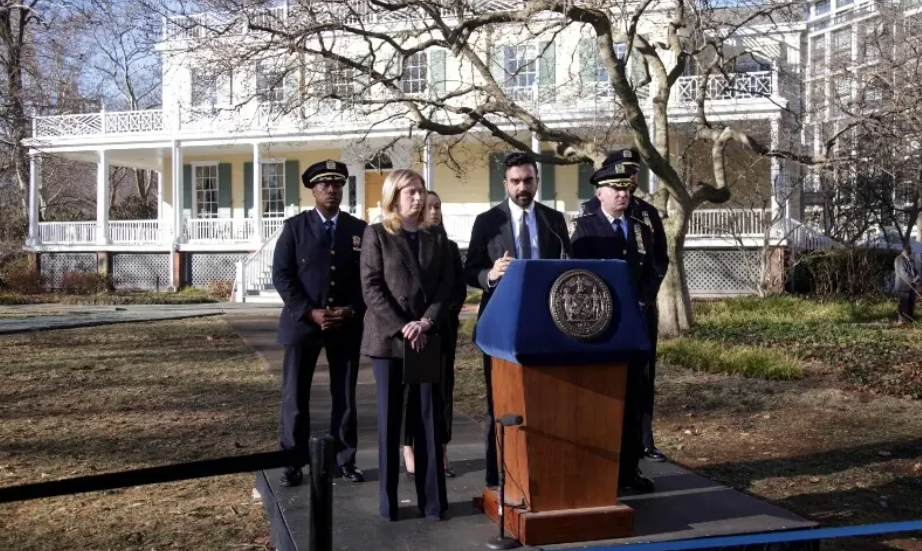
New York IED Incident Investigated as ISIS-Inspire...
Two men arrested after an IED thrown near NYC Mayor Zohran Mamdani’s residence is being ...
-
China Proposes Five-Point Plan to Resolve Middle E...
China urges ceasefire in the Middle East, calls for respect for sovereignty, non-interfere...
-
Gerry Adams Faces Lawsuit Over IRA Bombings in Bri...
Former Sinn Fein leader Gerry Adams appears in London court over a civil case linking him ...