POLITICS & POLICY MAKING
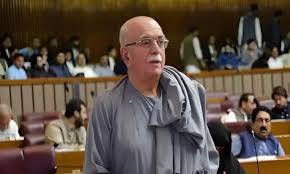
The appointment of Mahmood Khan Achakzai as Leader of the Opposition in the National Assembly, following his nomination by Pakistan Tehreek-e-Insaf (PTI) founder and former Prime Minister Imran Khan, has been challenged in the Federal Constitutional Court (FCC).
Justice (retd) Shaukat Aziz Siddiqui, representing PTI founding leader Akbar S. Babar, filed a 55-page constitutional petition on Monday, alleging that the appointment process violated constitutional provisions and the rules of procedure of the National Assembly. Supreme Court lawyer Imran Shafiq and advocate Hanbal Murad Siddiqui will assist in the case.
The petition claims that Rule 39(3) of the National Assembly Rules of Procedure 2007 was ignored, as the mandatory verification of signatures and consent of National Assembly members was not conducted. This, the petition argues, amounts to a violation of constitutional guarantees under Articles 4 and 17.
Babar’s legal team further contends that the appointment constitutes a serious constitutional breach because Imran Khan, who nominated Achakzai, is incarcerated and disqualified from holding public office. Under Articles 62 and 63 of the Constitution, a disqualified individual cannot interfere, directly or indirectly, in the political process.
The petition also challenges the Speaker’s authority in announcing the appointment, arguing it is conditional on confirmation of the free and voluntary opinion of Assembly members, making signature verification a mandatory, not discretionary, requirement.
The FCC has been requested to declare Achakzai’s appointment null, void, and illegal, and to direct the Speaker to initiate a fresh appointment process under Rule 39(3). Meanwhile, the court is also asked to restrain Achakzai from participating in any constitutional proceedings as Leader of the Opposition until a final decision is reached.
This case marks a significant constitutional test for parliamentary procedure in Pakistan, highlighting the tensions between party nominations, legal constraints, and the independent verification process required for key political appointments.
-
Senate Debate Highlights Imran Khan’s Health and...
Raja Nasir Abbas urges govt to meet PTI founder Imran Khan, citing health concerns and fam...
-
Pakistan Strikes Terrorist Hideouts in Afghanistan...
Pakistan conducts targeted airstrikes in three Afghan provinces against TTP and Fitna al-K...
-
Rana Sanaullah Defends PTI Founder, Punjab Plane P...
Rana Sanaullah warns Afghanistan to choose between terrorists or Pakistan, urges PTI suppo...
-
Opposition Protests Outside SC, Demands Early Hear...
Opposition leaders protest outside the Supreme Court, demanding urgent hearings of Imran K...
-
PTI Demands Judicial Probe into Punjab CCD ‘Enco...
PTI calls for a judicial inquiry into 924 deaths reported during 670 CCD operations in Pun...