POLITICS & POLICY MAKING
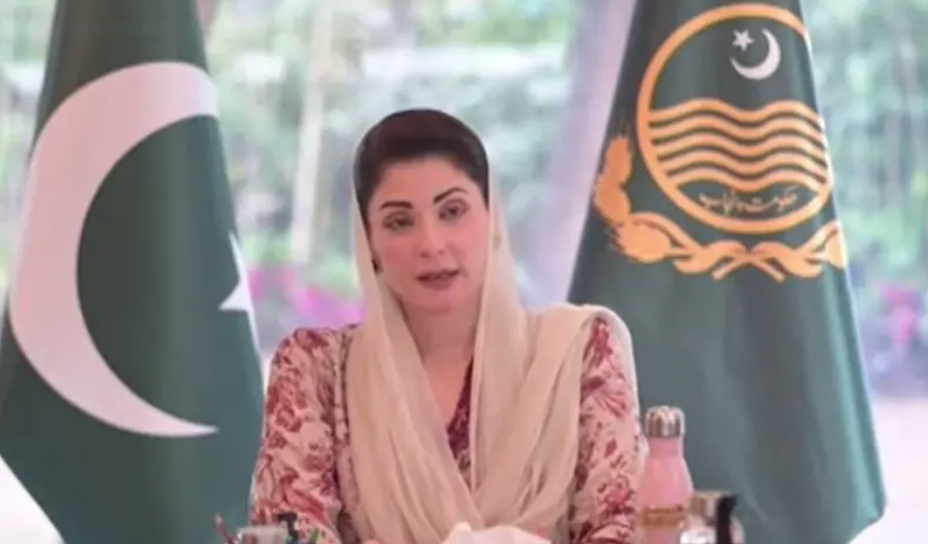
Punjab Chief Minister Maryam Nawaz on Saturday declared that the riverine (katcha) areas of Rahim Yar Khan and Rajanpur had been “100 per cent cleared” of dacoits following an extensive multi-phase security operation conducted over the past several weeks.
Addressing a high-level meeting after the completion of the operation, the chief minister said the region had long been considered a no-go area for state institutions, including the police, Counter-Terrorism Department (CTD), and other law enforcement agencies. She stated that the writ and authority of the state had now been fully restored.
Three-Phase Operation
Maryam Nawaz explained that the operation was launched in three distinct phases.
The first phase, initiated at the end of December, combined ground operations with aerial surveillance to target widespread criminal networks operating in the katcha belt.
In the second phase, law enforcement agencies cordoned off and secured major criminal strongholds, including Mach, Katcha Rajwani, and Katcha Karachi. These areas were brought under state control through coordinated action.
The third phase, described as the “surrender phase,” continued from January 7 to February 13. During this period, more than 500 dacoits and criminals laid down their arms, including high-profile gang leaders from groups identified as Umrani, Sikhani, Dolani, Bingyani, Lathani, and Inder.
According to the chief minister, 34 of the surrendered criminals carried bounties of Rs10 million each.
Weapons Recovery and Technology Use
Authorities recovered a large cache of weapons during the operation, including grenade launchers, sub-machine guns, shotguns, and pistols.
Maryam Nawaz highlighted the use of advanced technology, such as drones, quad-dopters, and night-vision cameras. She said criminals’ movements were digitally monitored and tracked through aerial intelligence assets, leaving them “no chance to hide or run away.”
The Punjab government deployed approximately 1,700 personnel, supported by armoured personnel carriers and bulletproof vehicles. She emphasized that the coordinated effort among law enforcement agencies, intelligence units, and the provincial government ensured the mission’s success. Notably, no casualties were reported during the operation.
Inter-Provincial Coordination
The chief minister thanked the Sindh government and Sindh Police for their support, especially given the operational challenges in the tri-border areas linking Punjab with Balochistan and Sindh. She said the success of the mission would not have been possible without their active cooperation.
Last month, Sindh Police also launched a parallel crackdown against riverine bandits. Sindh Inspector General of Police Javed Alam Odho reported 113 encounters since the launch of the operation, resulting in 27 kidnappers killed, 82 injured, and 77 arrested.
Historic Recruitment and Development Plans
Maryam Nawaz also termed the recruitment of 53 women from the tribal areas of Dera Ghazi Khan into the border police as a historic milestone, calling it the first such initiative in 78 years.
Describing the clearance of the katcha belt as an “unprecedented achievement,” she said the government aims to sustain peace in the region. A special development package is being planned, and a committee has been established to oversee long-term rehabilitation and infrastructure improvements.
“From a zone of fear, it has now become a zone where there is rule of law,” the chief minister concluded, reaffirming her government’s commitment to maintaining stability in the region.
-
Sindh CM Murad Ali Shah Promises Gul Plaza Rebuild...
Sindh Murad Ali Shah announces Gul Plaza will be rebuilt, compensation checks to victims i...
-
Zardari Criticizes Leaders for Lack of Resolve, Ex...
President Asif Ali Zardari recalls his 14 years in jail, criticizes current leaders for la...
-
Clash Erupts Between Police and JI Protesters Outs...
Police used tear gas against Jamaat-i-Islami Pakistan workers outside the Sindh Assembly a...
-
Dr. Khalid Maqbool Siddiqui Calls for Administrati...
Federal Minister Khalid Maqbool Siddiqui says constitutional procedure exists for new prov...
-
PM Shehbaz Directs Mohsin Naqvi to Strengthen Isla...
PM Shehbaz Sharif directs Interior Minister Mohsin Naqvi to address Islamabad’s security...